Infographic
ONE INFECTION REPORTED TWICE Understanding MRSA NHSN Dual Reporting
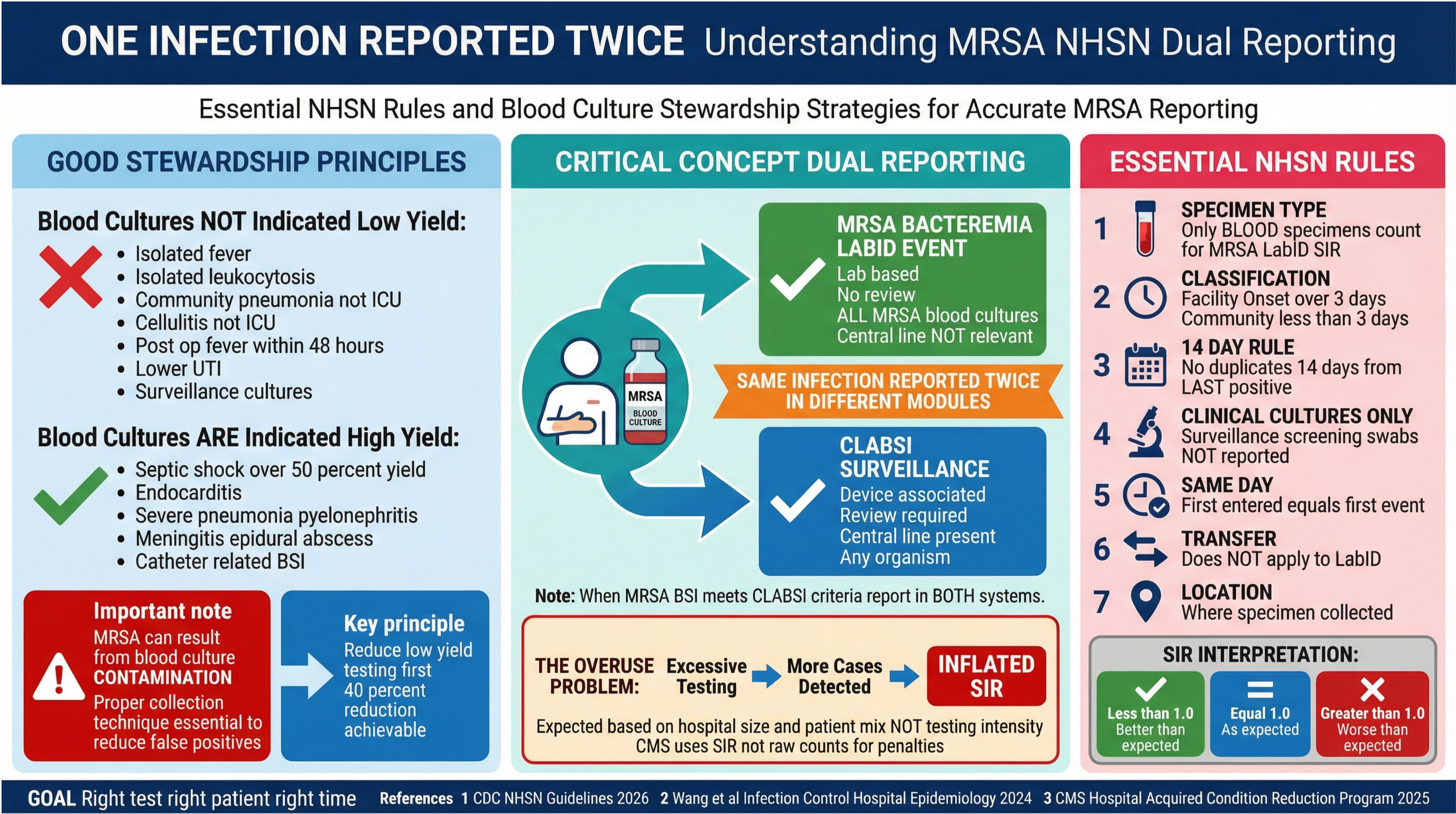
Your hospital might be reporting more MRSA infections than it actually has. Under NHSN rules, one MRSAbloodstream infection can sometimes get counted twice when it also meets CLABSI criteria, quietly pushing the SIR up. This isn’t just an HAI problem. The real fix is better blood culture stewardship, and that takes collaboration between frontline clinicians, the lab, and infection prevention. When stewardship is strong, cultures are used more thoughtfully, contamination risk drops, and false MRSA LabID events become less common. That also means fewer unnecessary antibiotics and surveillance data that better reflect the true infection burden. Take-home: blood culture stewardship influences antibiotic use, contamination risk, and NHSN reporting outcomes.
Infographic
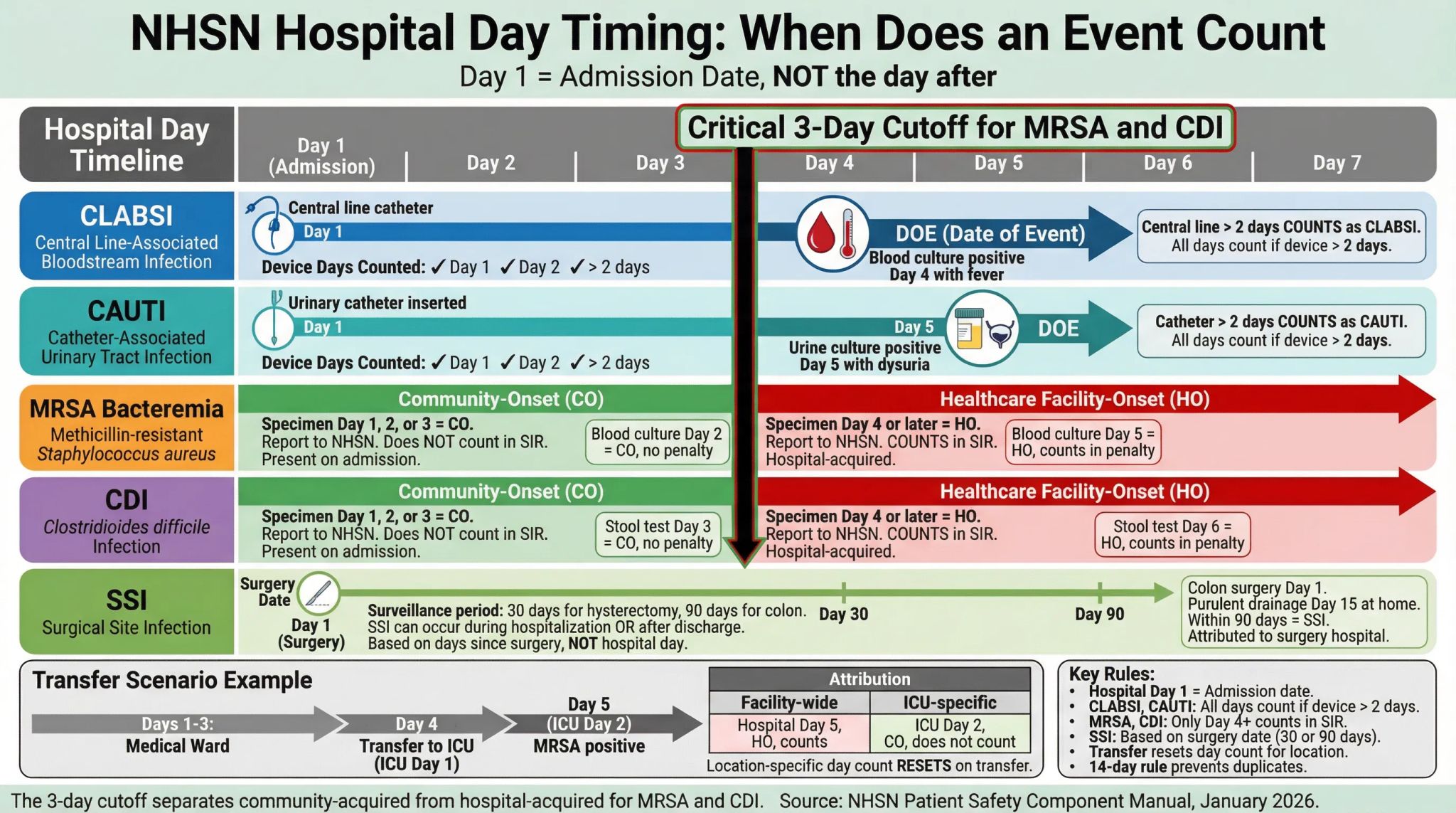
NHSN infection surveillance rules
NHSN infection surveillance requires precision in timing and criteria. Day 1 equals admission date—the 3-day cutoff separates community from hospital-acquired MRSA and CDI. Notably, CLABSI requires clinical judgment beyond physician diagnosis, while CAUTI can be diagnosed by physicians alone. Understanding these nuances ensures accurate reporting and effective prevention strategies.
Infographic
Which C. difficile testing workflow actually makes sense for your hospital?
Which C. difficile testing workflow actually makes sense for your hospital? This infographic looks at three commonly used algorithms and shows how much NHSN reporting can shift—anywhere from 4% to 12%—based on modeled scenarios. The point isn’t to tell you what to choose, but to spark the right conversation. Since no single test can fully define CDI, multi-test algorithms are often needed to balance sensitivity, specificity, and real clinical meaning. In the end, the best approach isn’t just about surveillance numbers—it’s about diagnostic stewardship, your patient population, cost and logistics, and, most importantly, patient outcomes.
Infographic
